






Discover quiet, lesser-known beaches in Loreto, from easy-access shores to remote coves worth the drive.
Most people who visit Loreto for the first time spend their days between the malecón and the downtown beach, or simply at the beach of the hotel where they’re staying. That’s completely understandable. The town is beautiful, the water is right there, and the Islands of Loreto are visible from practically every corner. But if you're the kind of traveler who likes to push a little further, to take the unmarked turn or ask a local where they actually go on weekends, Loreto tends to reward that kind of curiosity. If you’re searching for hidden beaches in Loreto, these are the ones that reward a little extra effort.
What follows is an honest guide to beaches that deserve far more attention than they get. Some are reachable by car, while others require a boat, a bit of patience, or a willingness to drive a dirt road. Every single one is worth it.
1. Ligüí: One of Loreto’s Most Underrated Beaches
About 37 kilometers south of Loreto, just before Highway 1 begins its dramatic climb into the Sierra de la Giganta, a sign marks the turnoff for Ligüí. Take it. The road drops down to a dark-sand beach that feels genuinely apart from everything, the kind of place where local fishermen still use as a launch point and where visitors remain a relative rarity.
The beach itself is dramatic rather than pretty in the conventional sense. The sand is darker, the landscape more rugged, and the backdrop is a steep wall of desert mountains that feels almost theatrical when the light changes in the afternoon. Underwater, the rocky substrate shelters juvenile fish among the boulders, making it a surprisingly productive spot for snorkeling for anyone willing to look closely.
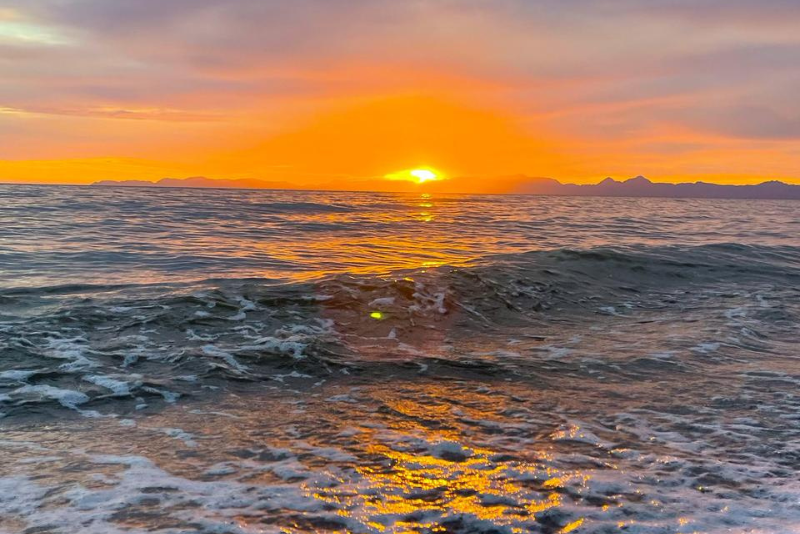
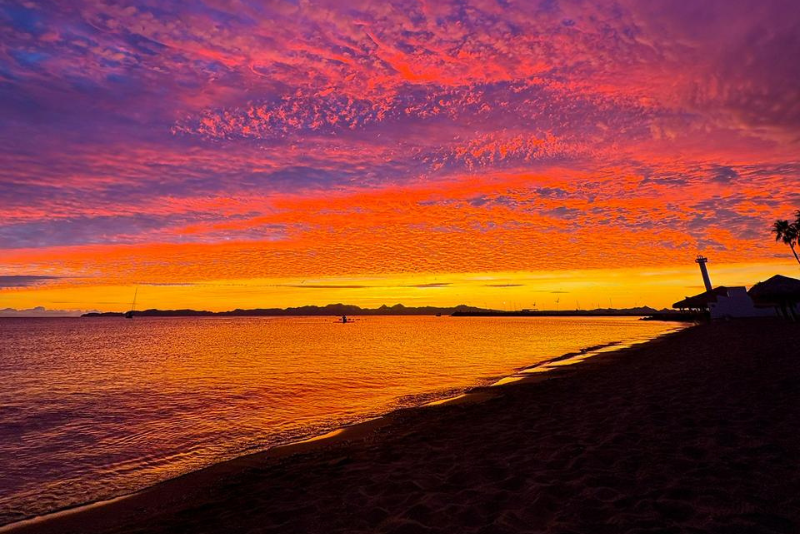
Come for sunset. The views over the Sea of Cortez from this beach at dusk are genuinely unforgettable.
Get directions: https://maps.app.goo.gl/9jHhKdQ7ykY4Dzut8
2. Juncalito: A Local Favorite Near Loreto
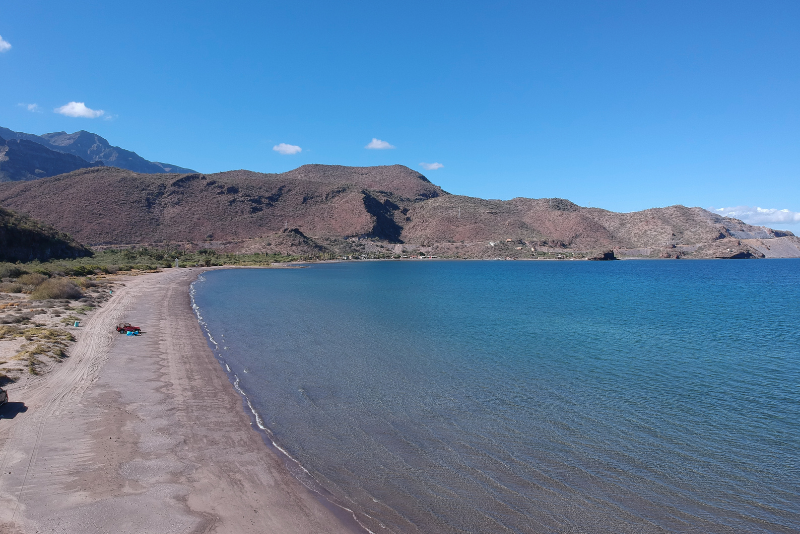
Just a short drive south of Loreto, Juncalito is one of those beaches that feels effortlessly right the moment you arrive. There’s no dramatic entrance, no signage trying to convince you of anything. Just a wide, open shoreline, clear water, and a rhythm that moves at its own pace.
The beach is a mix of sand and small stones, with gentle waves that make it easy to wade in and spend time in the water without thinking too much about it. Fishing pangas come and go throughout the day, pelicans glide low over the surface, and the Sierra de la Giganta rises quietly in the background.
It’s also one of the more common camping spots in the area, especially for locals who come to spend a full day, or stay into the evening when conditions allow. It’s the kind of place people return to without needing a reason. Bring a chair, bring something cold to drink, and settle in. Juncalito isn’t about checking something off a list. It’s about staying a little longer than you planned.
Get directions: https://maps.app.goo.gl/wgQZBmQ8uN5tytPa6
3. Honeymoon Beach at Isla Danzante
Of the five islands within Loreto Bay National Park, Isla Danzante is the smallest and, in many ways, the most intricate. Its steep, jagged coastline has been carved by the sea into inlets, coves, and rock formations that are genuinely difficult to see unless you're right up against them in a kayak or a small boat.
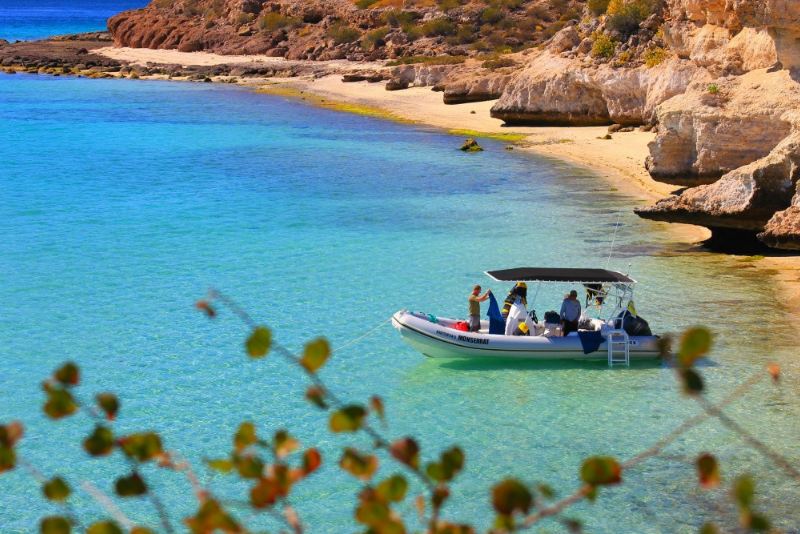
A full circumnavigation reveals landmarks that you wouldn’t find on most maps: a natural arch called La Ventana, worn through the volcanic rock by centuries of wave action; a formation known locally as Roca Submarino; and a sheltered beach known as Honeymoon, with red cliffs on one side, white sand on another, and water so clear you can count the fish below the surface before you even get in.
There are also smaller, less accessible stretches of sand tucked into the coastline, some of which can only be reached by water. The snorkeling around Danzante tends to involve octopus, moray eels, sea turtles, and dense schools of fish moving through the coral heads. It’s quieter than Coronado, less visited, and ideal for those looking for something more secluded.
4. El Requesón: The Sandbar That Changes Shape with the Tides
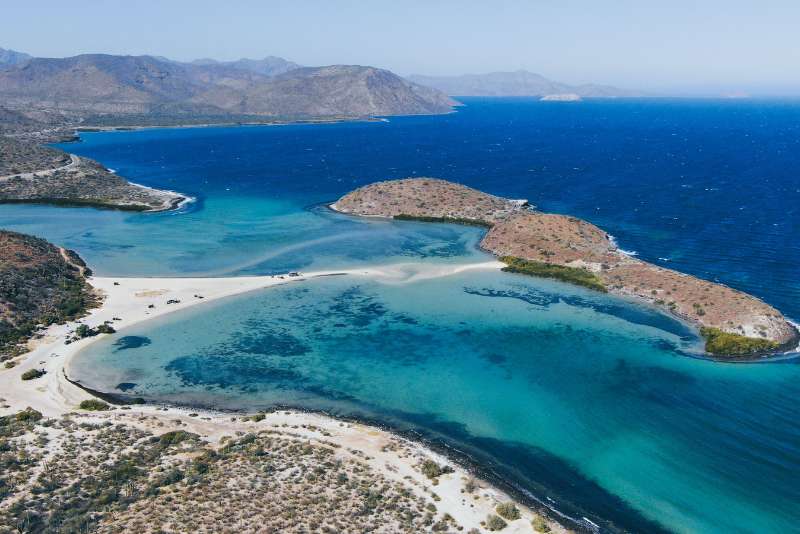
About an hour and a half north of Loreto, where Highway 1 curves along the edge of Bahía Concepción, you’ll find one of the most visually unusual beaches in all of Baja California Sur. Playa El Requesón is a narrow tongue of white sand that extends from the shoreline toward a small island offshore, and at low tide it becomes a walkable sandbar connecting the two. You can literally stroll out across the water to an island, with the bay on both sides of your feet.
The waters here are extraordinarily calm, protected by the bay and shallow enough for children to wade well out from shore. The combination of that stillness, the desert hills pressing down to the waterline, and the low tide sandbar makes El Requesón one of the more photogenic spots on the entire peninsula.
Camping is permitted and popular, with local vendors renting shade palapas for a small fee. Kayak rentals are usually available, fresh ceviche shows up from time to time, and the entry fee per vehicle is paid in cash at the gate. There are no hotels, no restaurants of consequence, and very limited shade. Bring your own water, bring food, and go on a weekday if you want something close to solitude.
Get directions: https://maps.app.goo.gl/2tm6LNvG9a58soJ38
5. Puerto Agua Verde: The End of the Road, In the Best Possible Way
This one requires commitment. From Highway 1, about 57 kilometers south of Loreto, a sign marks the turnoff for Agua Verde. After that, you drive a winding, steep, narrow dirt road through the Sierra de la Giganta for roughly 50 more kilometers.
What waits at the bottom is a quiet bay framed by two rocky headlands, with a small fishing village set along its shoreline. The water here takes on an extraordinary shade of green, the kind of color that doesn’t quite feel real at first. Pelicans move through the shallows at dusk, and fishing boats come and go with the rhythm of the day.
What Puerto Agua Verde offers is something that has become increasingly rare along the coast: a beach that feels genuinely undiscovered, a small community that moves at its own pace, and a kind of stillness that takes a full day to properly absorb. The bay is calm enough for kayaking and paddleboarding in the mornings, and the snorkeling around the rocky edges is consistently rewarding. The drive back through the mountains at golden hour, with the Sea of Cortez stretching out below, is one of those moments that tends to stay with you.
Get directions: https://maps.app.goo.gl/CVHpVnHVv2PLjnFU8
6. Isla Coronado Beach: The White Sand Island That Earns Its Reputation
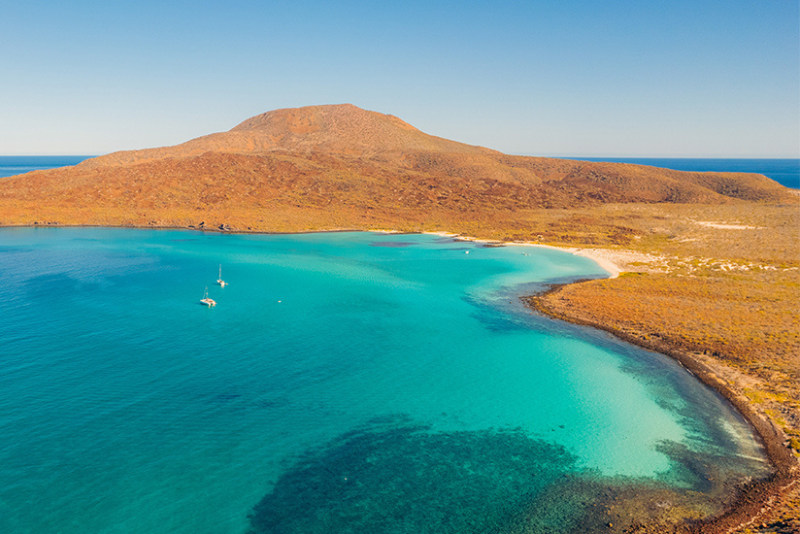
Isla Coronado sits about 25 to 30 minutes by boat from the Loreto marina, and it is one of those places where the photographs genuinely don’t exaggerate. The beach on the western side of the island, formed from ancient decaying coral reef, is legitimately white, genuinely soft, and looks out over water that shifts between turquoise and deep blue depending on the angle of the light.
The island itself is an inactive volcano, and the contrast between the dark lava cliffs on the eastern face and the pale beach on the western side is striking. Most tour boats circumnavigate the island before anchoring at the beach, which gives you time to scan the dramatic coastline, watch ospreys nesting in the crags, and sometimes spot dolphins riding the bow wake during the crossing.
The sea lion colony at the back of the island is the headline attraction, and rightfully so. These animals are curious and completely unbothered by snorkelers. They’ll circle you, dart past your fins, and occasionally stop to stare at you from just a few feet away. It’s the kind of encounter that tends to reorder the rest of your trip.
Isla Coronado is part of Loreto Bay National Park, a UNESCO World Heritage Site, which means the ecosystem is protected and the water stays clean. Don’t skip this one. It’s called a must-do for a reason.
FAQs About Hidden Beaches in Loreto
What is the most beautiful hidden beach in Loreto?
Isla Coronado is often considered the most visually striking, but beaches like Honeymoon on Danzante Island and Ligüí offer a quieter, more remote experience.
Are Loreto’s hidden beaches easy to reach?
Some, like Nopolo, Ligüí, and Juncalito, are accessible by car. Others, like the beaches on Coronado and Danzante Islands, require a boat.
Do you need a 4x4 to visit remote beaches near Loreto?
For places like Agua Verde, it’s highly recommended, especially after rain.
What are the best beaches in Loreto for private camping under the stars?
Juncalito is one of the most popular spots for camping, especially among locals. Its easy access, open shoreline, and relaxed atmosphere make it ideal for spending the day and staying into the evening when conditions allow.
Are there any hidden beaches near Loreto with natural shade or palapas?
Most of Loreto’s more secluded beaches offer little to no shade, so it’s best to come prepared. While not considered a hidden beach, La Negrita is one of the few spots in the area with palapas available.
Which secret spots offer the best snorkeling away from the main tourist groups?
Beaches like Nopolo, Ligüí, Juncalito, Isla Coronado, and Isla Danzante all offer excellent snorkeling, especially around rocky areas and reef formations.
What should I pack for a day trip to a beach with no services or shops?
Bring plenty of water, food, sun protection, and anything you’ll need for the day, including shade if possible. It’s also a good idea to pack snorkeling gear, sturdy footwear for rocky areas, and a trash bag to carry everything back out with you.